
How to know if your brand appears in ChatGPT
Does your brand show up in ChatGPT when someone asks for recommendations in your category? How to check it with a manual test, its limits and how to measure it for real.


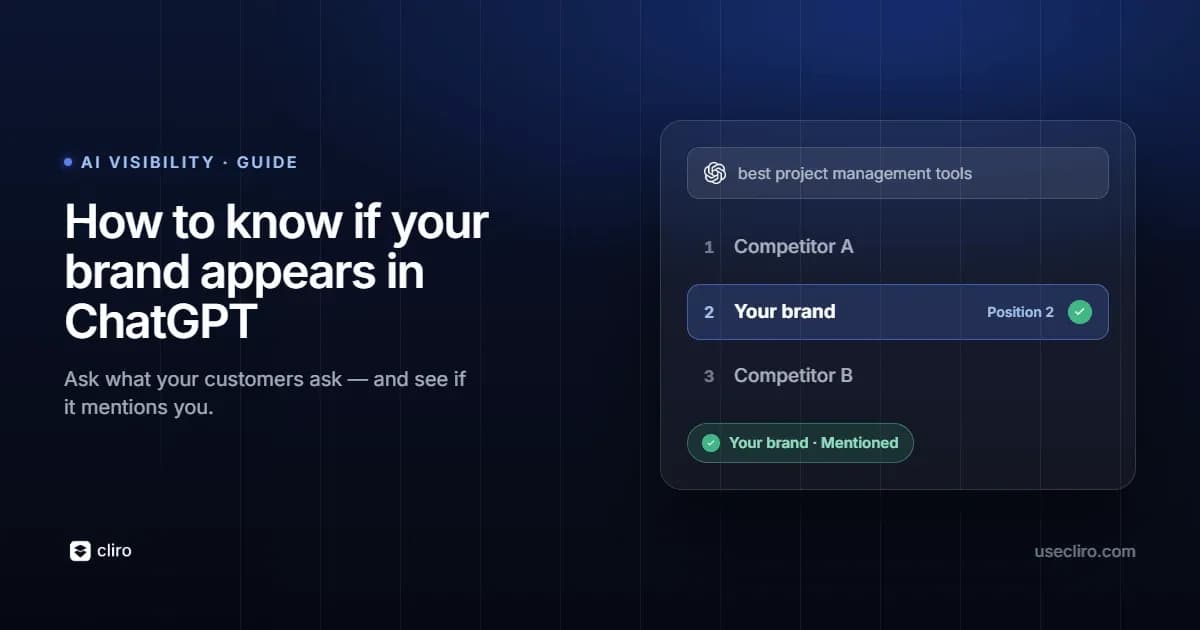
For many people, ChatGPT is now the first place they go for a recommendation. If someone asks it about the best options in your category and your brand doesn't show up, you're losing opportunities without even knowing. The good news: you can check. The less good news: doing it well is harder than it looks.
To find out if your brand appears in ChatGPT, ask it the questions your customers would ask and see whether it mentions you, in what position, and alongside which competitors. To measure it for real —not as an isolated snapshot— you need to repeat many prompts systematically, because answers vary across people, sessions and models.
Why does it matter whether you appear in ChatGPT?
Because more and more buying decisions start with a question to AI. If you don't show up, a competitor gets the recommendation and you never find out. And since ChatGPT's answers change from one time to the next, checking once gives you a misleading snapshot: you need a measurement, not an anecdote.
Method 1: the manual test
It's the quick way to start and good for a first signal. Step by step:
- Build a list of prompts your customers would actually ask (for example, "best [your category] tools", "alternatives to [competitor]", "what software helps with [problem]"). Important: without naming your brand.
- Open ChatGPT and ask each one.
- For each, note: does it mention you? in what position? which competitors appear? does it cite sources?
- Repeat each prompt several times, because the answer changes.
How to run the manual test well
- Without your brand in the prompt: naming it biases the answer toward it.
- Without memory: use a temporary chat or turn off memory. If ChatGPT already knows who you are, the result isn't representative.
- Repeat: the same question gives different answers; one isn't enough.
- Try variations of the same intent (different ways to ask the same thing).
- Try other models: not just ChatGPT, but Gemini, Claude, Perplexity and Grok too.
The limits of checking by hand
- Variability: the answer changes across sessions, accounts, locations and model versions.
- It doesn't scale: measuring dozens of prompts, across several models, over time, by hand, isn't feasible.
- No history: you can't see whether you're improving or getting worse.
- Account bias: your memory and location contaminate the result.
- No aggregate view: you don't see your share of voice or which sources AI cites.
Method 2: systematic monitoring
To really measure it, you need a tool that runs many prompts automatically and consistently, across several models, and gives you metrics over time. That's what an AI visibility platform like Cliro does: it monitors your prompts across ChatGPT, Gemini, Claude, Perplexity and Grok; measures your visibility, your position and your share of voice against competitors; and shows you which sources AI cites when talking about your brand. You go from "I think I don't show up" to a number you can move.
Which metrics to watch
- Visibility: the percentage of answers that mention you.
- Position: where in the answer you appear.
- Share of voice: your presence versus your competitors'.
- Sentiment: how AI describes you.
- Citations and sources: which sites it uses to recommend you (or others).
What if I don't appear?
That's where GEO comes in. In short: make sure AI can read your site, structure your content so it's citable, earn third-party mentions and publish first-party data. For the full breakdown, see our guide on what GEO is.
Frequently asked questions
Does ChatGPT always give the same answer?
No. It varies across sessions, accounts, location and model version. That's why a single test isn't enough.
Why does it mention me to one person but not another?
It's usually due to your account's memory, your location, the model used, or whether web search is on.
Can I see which sources ChatGPT used?
Sometimes, when it browses and cites. AI visibility tools record this systematically.
How often should I check?
Continuously, not once: your visibility changes with every model update and with new content on the web.
Is this only for ChatGPT?
No. The same method applies to Gemini, Claude, Perplexity and Grok, and it's worth measuring all of them.

Written by
Federico Ergang
Cliro cofounder & CEO
Federico Ergang is cofounder and CEO of Cliro, the AI visibility and GEO platform for Latin America.
Related articles
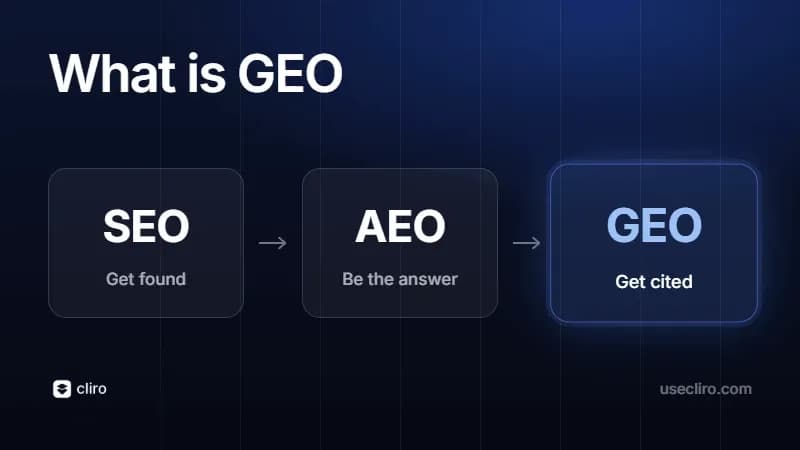
What is GEO (Generative Engine Optimization)? A complete guide
GEO (Generative Engine Optimization) means optimizing your brand to show up in answers from ChatGPT, Gemini and other AI. What it is, why it matters, how to do it and how to measure it.
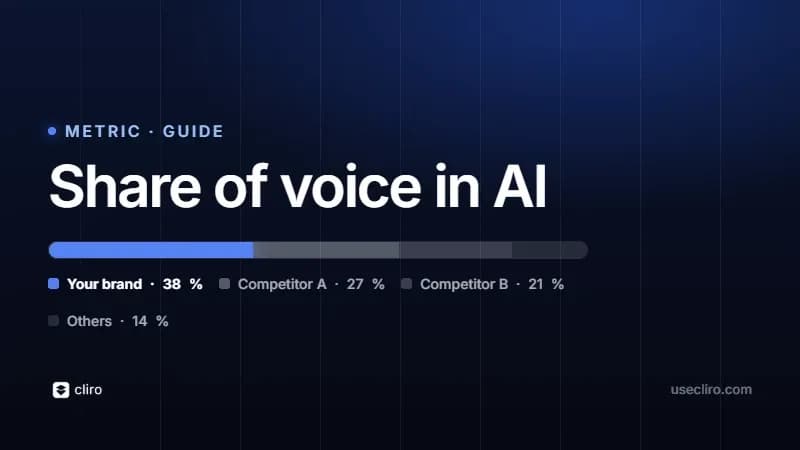
How to measure your brand's share of voice in AI
What share of voice in AI is and how to measure it: how often models mention you versus your competitors, how it's calculated and how to improve it.
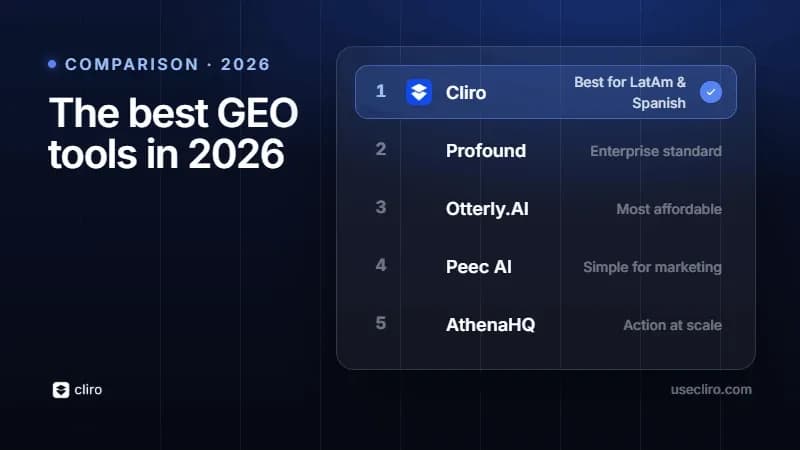
The best GEO tools in 2026
We compare the best GEO tools in 2026 —Cliro, Profound, Otterly, Peec AI and AthenaHQ— and which type of team each one is for.