How to appear in ChatGPT: an optimization guide (GEO)
A practical GEO guide to getting ChatGPT to mention and cite your brand: how it retrieves and selects sources, why it cites only a fraction of what it reads, and the levers that actually move visibility.


Knowing that AI drives decisions is fine, but the real question is another one: how do you get ChatGPT to mention your brand when someone asks about your category? There's no magic button, but there is a set of practices that reliably move the needle, grounded in how ChatGPT actually retrieves and selects sources. This is the guide.
To appear in ChatGPT you need three things: that it can access your content (don't block its crawlers, and keep the content in the HTML), that your content is clear and citable (direct answer, concrete data, structure), and that you're present in the third-party sources ChatGPT consults (Wikipedia, Reddit, review sites, media, comparisons). Crucially, ChatGPT cites only a small fraction of the pages it reads, so appearing is a two-stage game: first be retrievable, then be citable. It's not instant; it's accumulated authority.
Why does your brand appear (or not) in ChatGPT?
There are two ChatGPT systems, and only one can cite you. The base model answers from training data with a knowledge cutoff and no live retrieval, so your content can't surface there. ChatGPT Search browses the live web in real time, drawing primarily from Bing's index, and it's the only mode where your page can earn a citation. A page Bing hasn't indexed cannot be retrieved by ChatGPT.
Browsing doesn't fire on every prompt. Analysis by Profound of roughly 700,000 conversations found that about 18% of ChatGPT conversations trigger at least one web search, and those searches cluster on the opening question of a research journey, the first question is far more likely to trigger citations than a later follow-up. So the target is the first question people ask about your category, not the clarifying ones.
And here's the part most brands miss: retrieval is not citation. When browsing fires, ChatGPT rewrites your query into several sub-queries, pulls dozens of candidate pages from Bing, and then cites only a handful, typically around four. An AirOps study across more than 548,000 pages found ChatGPT cites only about 15% of the pages it retrieves; the other 85% are read and discarded. Three factors decide which ones survive, according to converging 2025–2026 research:
| Factor | What ChatGPT rewards | Representative finding |
|---|---|---|
| Structure | Content it can parse and extract a clean claim from | Pages with FAQ schema and inline citations weighted ~40% higher; ~44% of citations come from the first 30% of a page (Authoritas, Zyppy) |
| Authority | Sources it can confidently attribute | Sites with 32,000+ referring domains ~3.5x more likely to be cited than sites under 200 (SE Ranking, 2025) |
| Freshness | Current information for time-sensitive queries | Content updated within 30 days receives ~3.2x more citations than stale content |
If your brand isn't well represented in the sources the model knows and consults, it won't appear. That's why the strategy is to be retrievable, extractable, and well-represented across trusted sources at the same time.
How to appear in ChatGPT, step by step
1. Give it access to your content
Check that your robots.txt doesn't block OpenAI's crawlers, GPTBot (which feeds training) and OAI-SearchBot (which it uses for search). Blocking the training crawler is a legitimate choice; blocking the search fetcher removes you from ChatGPT Search entirely. Then confirm your content lives in the initial HTML, not only loaded via JavaScript: if it isn't in the HTML, for many crawlers it doesn't exist. Finally, make sure your key pages are indexed in Bing (submit your sitemap in Bing Webmaster Tools), since that's the index ChatGPT Search retrieves from. This is the most common invisible blocker.
2. Make your content citable
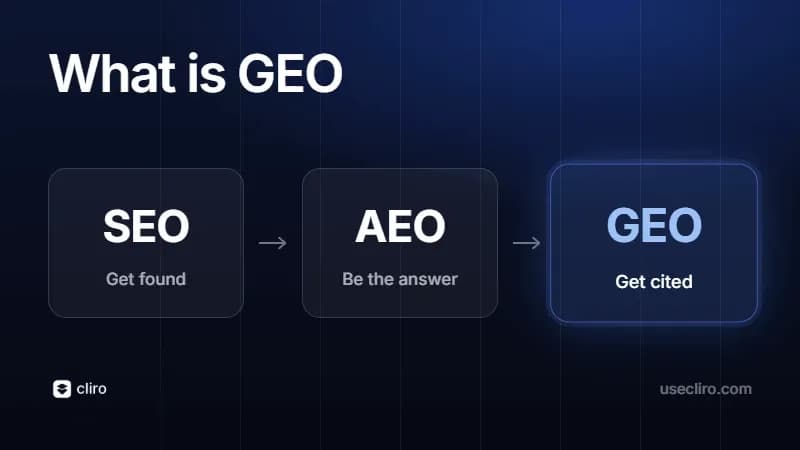
ChatGPT prefers clear, self-contained content it can extract and attribute a specific claim to. Open each section with a direct answer of about 40 to 80 words, an “answer capsule” the model can lift whole, because roughly 44% of citations come from the first 30% of a page. Use question-style headings that mirror the exact query, add concrete data, comparison tables, and an FAQ with schema; structured pages have been found to earn around 3x more citations than equivalent plain prose. This is AEO, and it's the foundation for a model to reuse your content.
3. Be where ChatGPT looks
When it browses, ChatGPT cites sources: Wikipedia (which appears in roughly 1 in 6 cited conversations), Reddit, review sites, media, specialized forums and third-party comparisons. A University of Toronto study (arXiv, September 2025) found AI search systematically favors earned media, third-party authoritative coverage, over brand-owned content. And citations travel in packs: ChatGPT co-cites competitors side by side, so aim to appear alongside the trusted domains already adjacent to your topic, not in isolation. Earning presence in those sources usually moves the needle more than optimizing only your own site.
4. Build brand authority
Authority is entry criteria for the citation pool more than a tiebreaker within it. Diverse backlinks from unique referring domains are among the strongest predictors of citation, and branded domains are cited notably more often than non-branded equivalents. Make sure your brand is a clear, consistent entity across the web: same name, same category, same value proposition, so the model can confidently associate you with your category.
5. Publish original data and content
What no one else has is the most citable: your own data, studies, clear definitions, original guides. When several sources say the same thing, ChatGPT tends to cite only the highest-authority or most recent one, so redundant content gets filtered out. Original data is the best way to become a source, not just another result.
6. Consider an llms.txt (with realistic expectations)
An llms.txt file signals which of your content is most relevant for AI systems. Be honest about it: it's a community convention, not a formal standard, and there's no confirmed citation lift from the major AI search engines yet, its clearest real use today is in developer agents. Treat it as a low-cost “AI-ready” signal, not a lever. For the full framework, read what GEO is.
7. Measure and iterate
Your visibility in ChatGPT changes with every model update and with new content on the web. It's also non-deterministic: the same prompt run several times can cite different sources each time, so a single test tells you almost nothing. Track which prompts you appear in, repeatedly and over time, and adjust. If you don't know how yet, see how to know if your brand appears in ChatGPT.
Mentioned or cited: what's the difference?
They're not the same, and the difference decides whether visibility turns into traffic. A mention is your brand named in the answer text, with no link. A citation is your page attributed as a source, with a clickable reference in the Sources panel, and only citations send referral traffic. Broad earned-media presence drives mentions; structure, freshness and extractability drive citations. You want both, but measure them as separate metrics, not as one number.
Does my current SEO help?
It helps as a foundation, but it's a weak predictor on its own. Pages at Google's top position are cited by ChatGPT more often, yet only about 12% of URLs ChatGPT cites also rank in Google's top 10, and one 2026 analysis found 44% of SaaS brands with strong Google rankings had no ChatGPT visibility at all. Strong SEO matters because Google and Bing recognize similar authority signals, but appearing in ChatGPT means optimizing retrieval (Bing index, crawler access) and citation (structure, data, freshness) directly.
How long does it take?
It's not immediate; think of it like SEO, it's cumulative. Because ChatGPT Search reads the live web, structural and schema changes can show up within roughly two to three weeks, faster than organic ranking. Off-page signals, review-platform presence and third-party mentions, take longer, often 30 to 60 days, because the model needs to re-encounter them. Treat these timelines as directional: they vary by study, model version, location and prompt wording. Access and structure improvements land sooner; source authority, later.
Common mistakes
- Accidentally blocking AI crawlers in robots.txt.
- Not being indexed in Bing, so ChatGPT can't retrieve you at all.
- Optimizing only your site and ignoring third-party sources.
- Content loaded via JavaScript that the crawler can't see.
- Burying the answer instead of front-loading it in the first 30% of the page.
- Publishing content that just repeats what higher-authority sources already say.
- Expecting instant results, or judging visibility from a single one-off test.
Frequently asked questions
Can I pay to appear in ChatGPT?
Not directly. Visibility is earned through presence and authority in the sources, not through paid ads.
Does ChatGPT use Google or Bing?
ChatGPT Search retrieves primarily from Bing's index, with additional signals from OpenAI's training data. That's why Bing indexation matters independently of your Google ranking.
How long does it take to work?
Weeks to months. It's cumulative, like SEO: first access and structure, then authority.
Does my current SEO help?
It's a foundation, not a guarantee. Only about 12% of ChatGPT citations rank in Google's top 10. Add AEO (citable content) and presence in third-party sources.
Do I have to be on Reddit and Wikipedia?
They're sources AI cites often, Wikipedia appears in roughly 1 in 6 cited conversations. Being genuinely well represented there helps the model mention you.
How do I know it's working?
By measuring your visibility over time and across runs, not with a one-off test, since citation is non-deterministic.

Written by
Federico Ergang
Cliro cofounder & CEO
Federico Ergang is cofounder and CEO of Cliro, the AI visibility and GEO platform for Latin America.
Related articles
How to appear in Google AI Overviews and Gemini
How to get your brand to show up in Google's AI Overviews and Gemini: why SEO is the foundation, the role of Google-Extended and what content wins.
How to appear in Perplexity
Perplexity cites only a few sources per answer. How to make your brand one of them: crawlability, extractable content, freshness and authority.
What is GEO (Generative Engine Optimization)? A complete guide
GEO (Generative Engine Optimization) means optimizing your brand to show up in answers from ChatGPT, Gemini and other AI. What it is, why it matters, how to do it and how to measure it.